Cost-effective manufacturing of precision components for humanoid robots
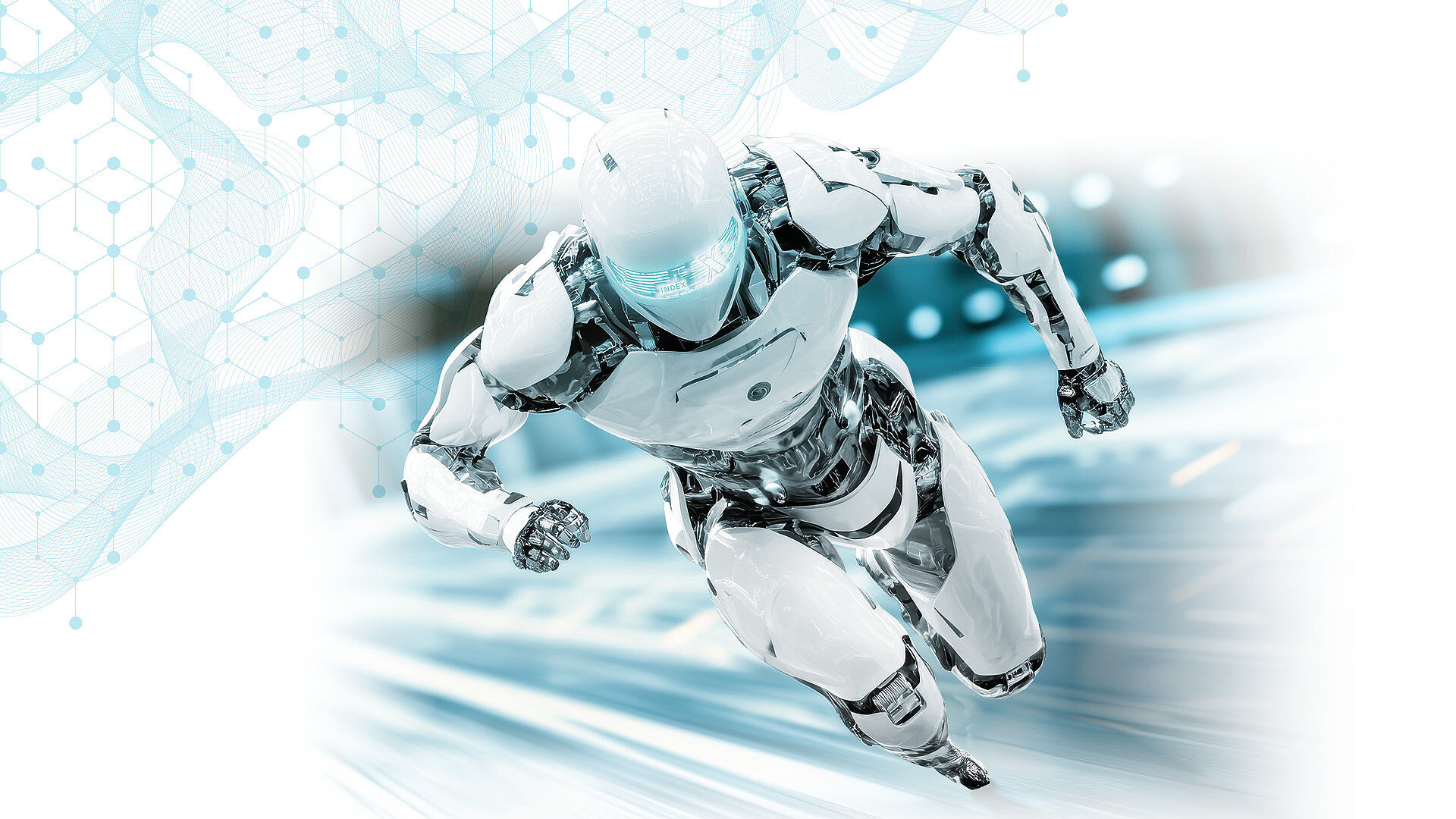
Every controlled movement of a humanoid robot begins with precision-manufactured mechanical components. Actuators, comprising a motor, gearbox, sensors and an encoder, operate within the joints. The gearbox components, in particular, must transmit high torques whilst meeting the most stringent requirements for accuracy, strength and surface finish.
With INDEX’s machine and technology solutions, components for helical gearboxes, planetary gearboxes and planetary screw gearboxes can be manufactured efficiently, with reproducible results and, depending on the application, fully automatically.
Why precision is the foundation of humanoid movement
Humanoid robots are designed to walk, balance, grasp, lift and carry out complex assembly tasks. To do this, each robot joint requires an actuator that converts electrical energy into controlled movement. The integrated gearbox provides the necessary torque for the respective joint.
Even the hand of a humanoid robot can contain twenty or more actuators in order to replicate the mobility and dexterity of a human hand. This presents considerable potential for manufacturers of high-precision drive, gearbox and structural components.
These mechanical drive units are among the core elements of humanoid systems. Their manufacture is comparable to the requirements of the automotive industry, medical technology and the aerospace sector. The key requirements are, in particular:
- High accuracy: Tight dimensional, form and positional tolerances for precise and repeatable movement of the robot joints.
- Complex geometries: Thin-walled components, intricate contours, threads and gear teeth require tailored machining processes.
- Cost-effective complete machining: Turning, milling, drilling, whirling and gear cutting are carried out, where possible, on a single machine and with a minimum number of set-ups.
- Reproducible processes: Stable machining processes form the basis for reliable series production and consistent component quality.
Areas of application and workpieces in the field of humanoid robotics
Humanoid robots require high-precision components to reliably perform complex movements and transmit high torques. INDEX’s machine solutions provide the ideal conditions for the cost-effective and reliable production of sophisticated components for actuators, joints and gearboxes. The following overview shows a selection of workpieces for which INDEX and TRAUB machines are suitable, amongst others.
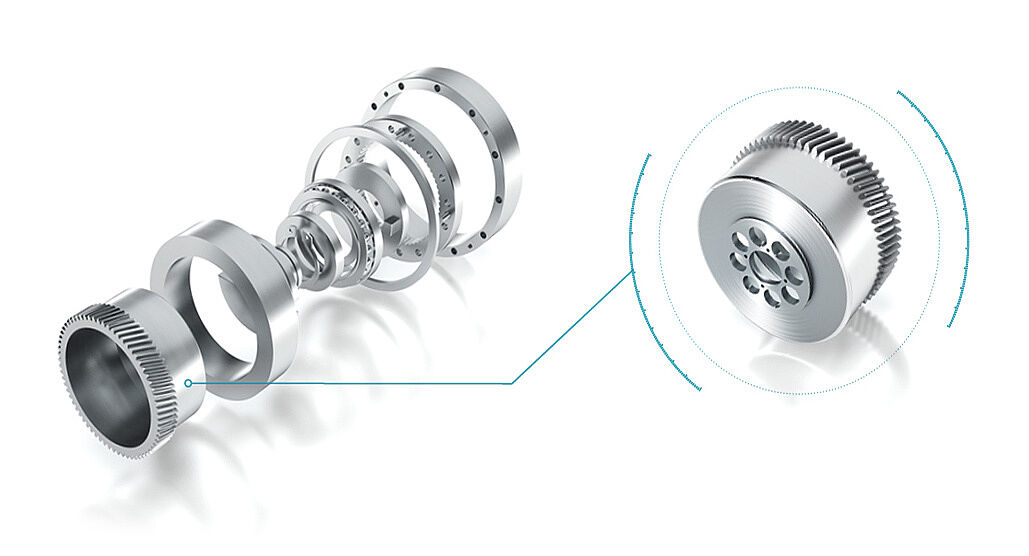
Strain wave gearbox
Flexspline
- Material: 34CrNiMo6 / SNCM439
- Diameter: Ø 55 x 35 mm
- Time per unit: 55 - 60 Seconds (from blank)
- Machine: INDEX MS40-8
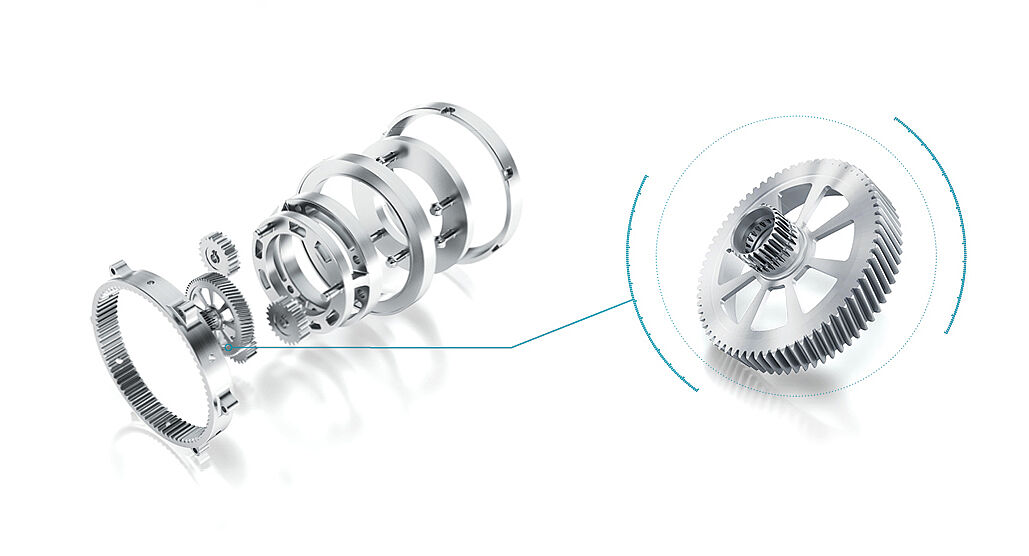
Planetary gear
Sun gear
- Material: 16MnCrS5
- Diameter: Ø 65 x 40 mm
- Time per unit: 4 Minutes and 20 Seconds
- Machine: INDEX G160 / TRAUB TNX160
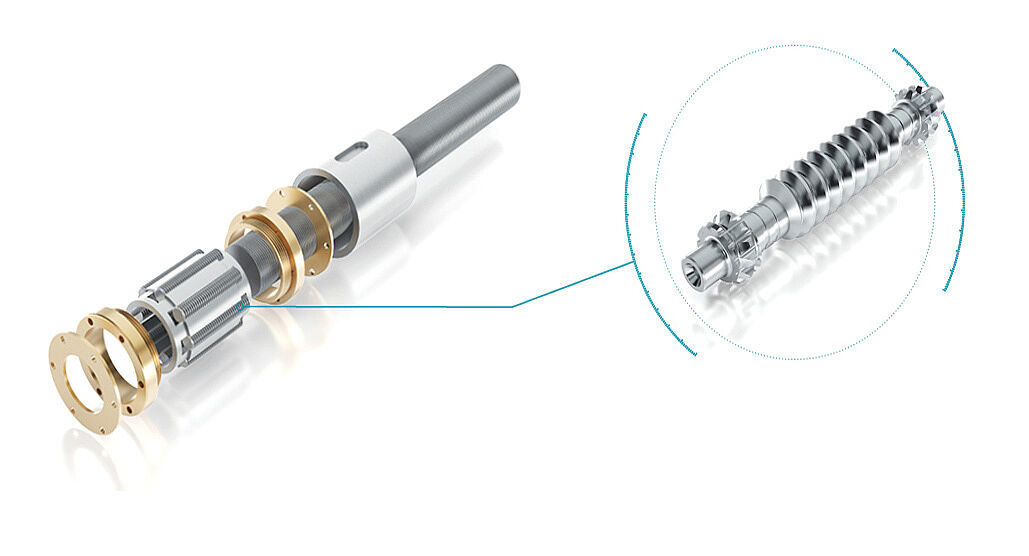
Panetary roll screw drive
Planetary rollers
- Material: 34CrNiMo6 / SNCM439
- Diameter: Ø 6 x 35 mm
- Time per unit: 18 Seconds
- Machine: TRAUB MS12-4
INDEX Machine Solutions for Humanoid Robots
Depending on the workpiece dimensions, geometry, material and production volume, different machine designs are used.
Our wide range of technological and machine solutions enables us to provide bespoke manufacturing solutions for requirements of any complexity.
Below are some examples of our machine solutions for the field of humanoid robotics.
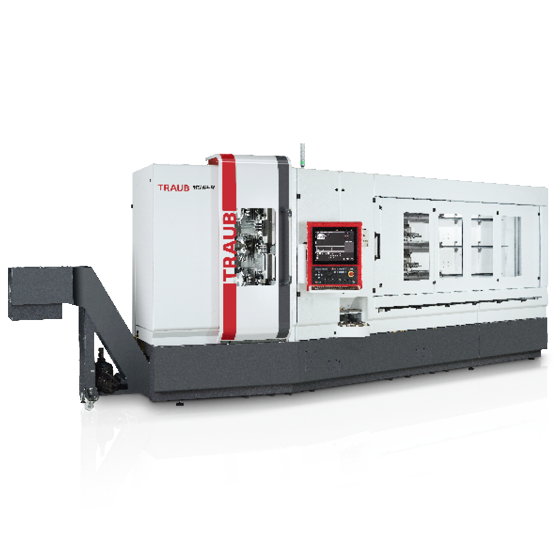
TRAUB MS12-4
The TRAUB MS12-4 is a high-productivity sliding/fixed headstock turning machine with four turning spindles. It enables the efficient complete machining of complex bar components and features a machine-integrated bar loading magazine. High-speed whirling supports the effective production of complex threads.
Particularly suitable for:
- Planetary rollers
- Threaded components
- Slim precision shafts
- Small component diameters
- High production volumes
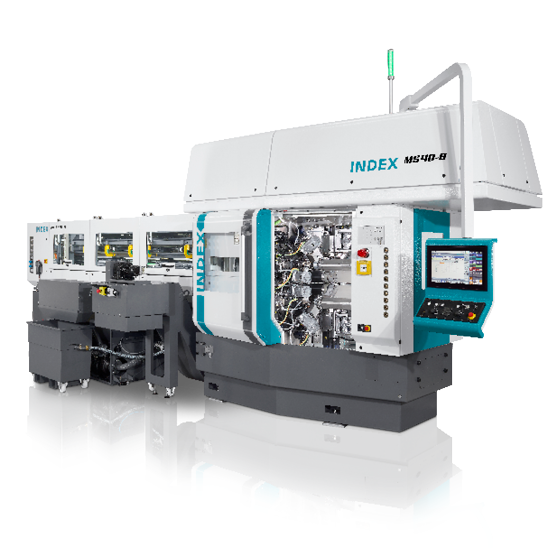
INDEX MS40-8
The INDEX MS40-8 combines high output with integrable gear-cutting processes. Direct-drive tool holders enable, amongst other things, gear hobbing or gear shaping. An integrated robotic automation system can handle loading and unloading.
Particularly suitable for:
- Flexsplines
- Gear shafts
- Complex mass-produced parts
- Geared components
- High production volumes
- Automated production
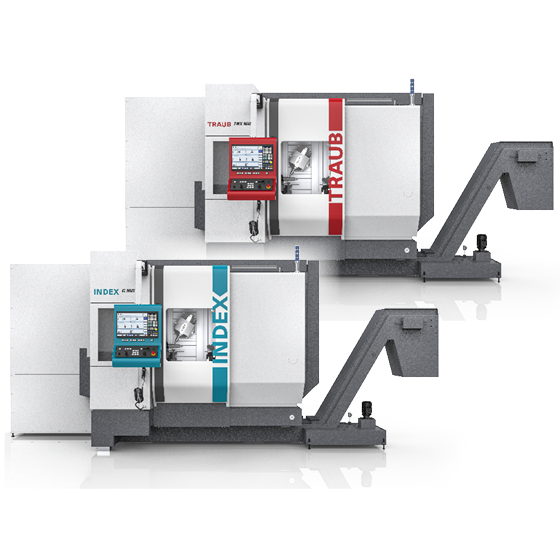
INDEX G160 und TRAUB TNX160
The INDEX G160 and TRAUB TNX160 turn and mill centers are ideally suited to the complete machining of bar and flange components. A generous working area, a large tool magazine and tool loading that takes place whilst the machine is in operation support flexible and cost-effective machining processes.
Particularly suitable for:
- Sun gears
- Flanged components
- Complex shafts
- Components requiring milling and gear-cutting
- Variant production
- Demanding complete machining
Using INDEX for the precise manufacture of components for humanoid robots
Many companies already possess the necessary expertise to enter the field of robotics component manufacturing. Experience gained in e-mobility, medical technology, aerospace and other high-end sectors can be applied to numerous components of humanoid robots.
INDEX supports companies in applying their existing manufacturing expertise to new families of workpieces. This includes the selection of suitable machines, the design of machining processes, gear-cutting technologies, and possible retrofits and modifications to existing machines.
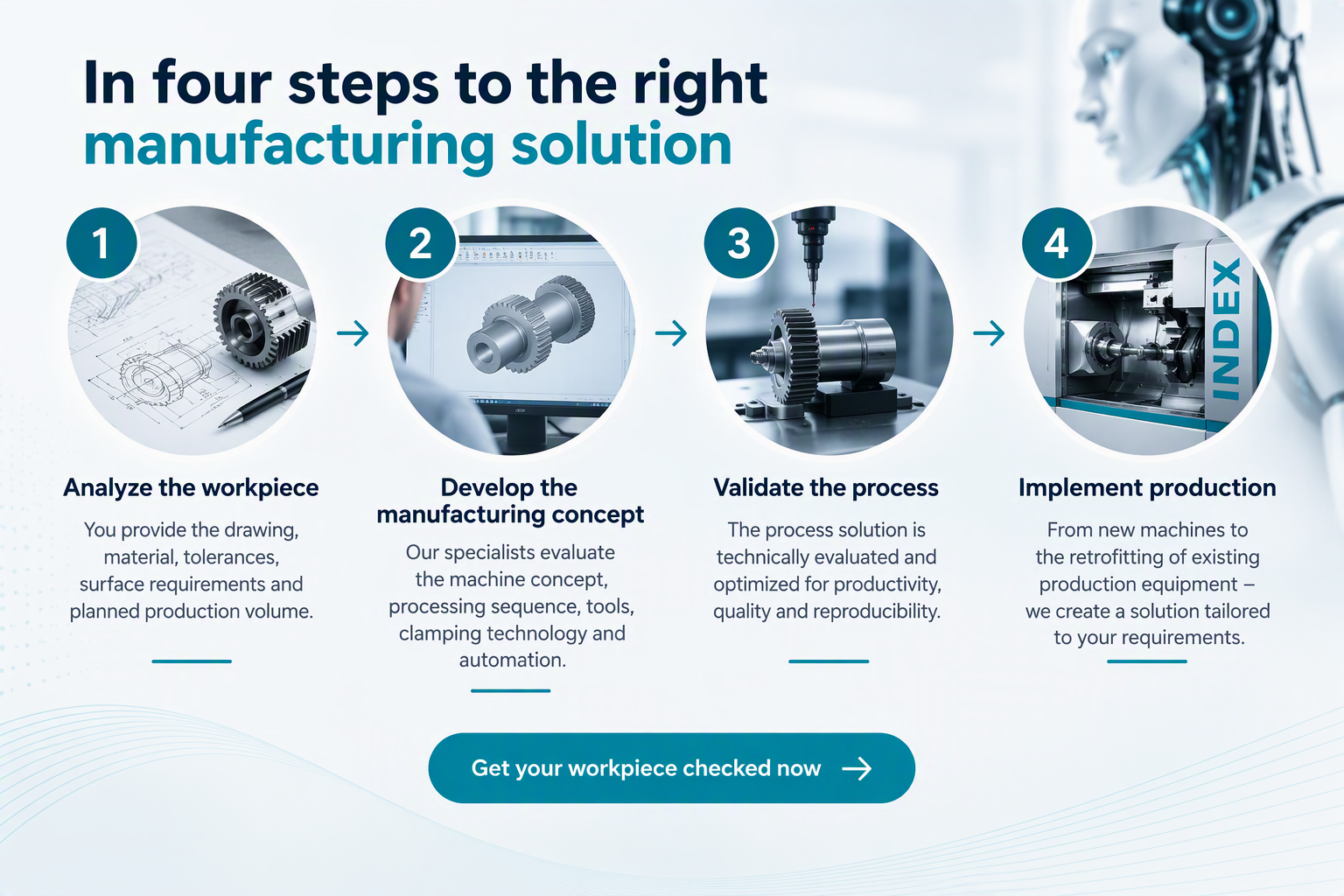
Our support for your robotics manufacturing
- Feasibility assessment based on your component drawing
- Selection of the appropriate machine platform
- Planning of the machining sequence
- Integration of turning, milling, threading and gear-cutting processes
- Evaluation of suitable automation concepts
- Assessment of possible retrofits and modifications
- Professional support from INDEX technology specialists
Your components are driving the robotics of tomorrow
Humanoid robots are opening up new possibilities in manufacturing and logistics. This requires high-precision, robust and cost-effective components for actuators, gearboxes and mechanical structures.
Take advantage of INDEX’s manufacturing expertise to transition new robotics components into stable and productive series production.